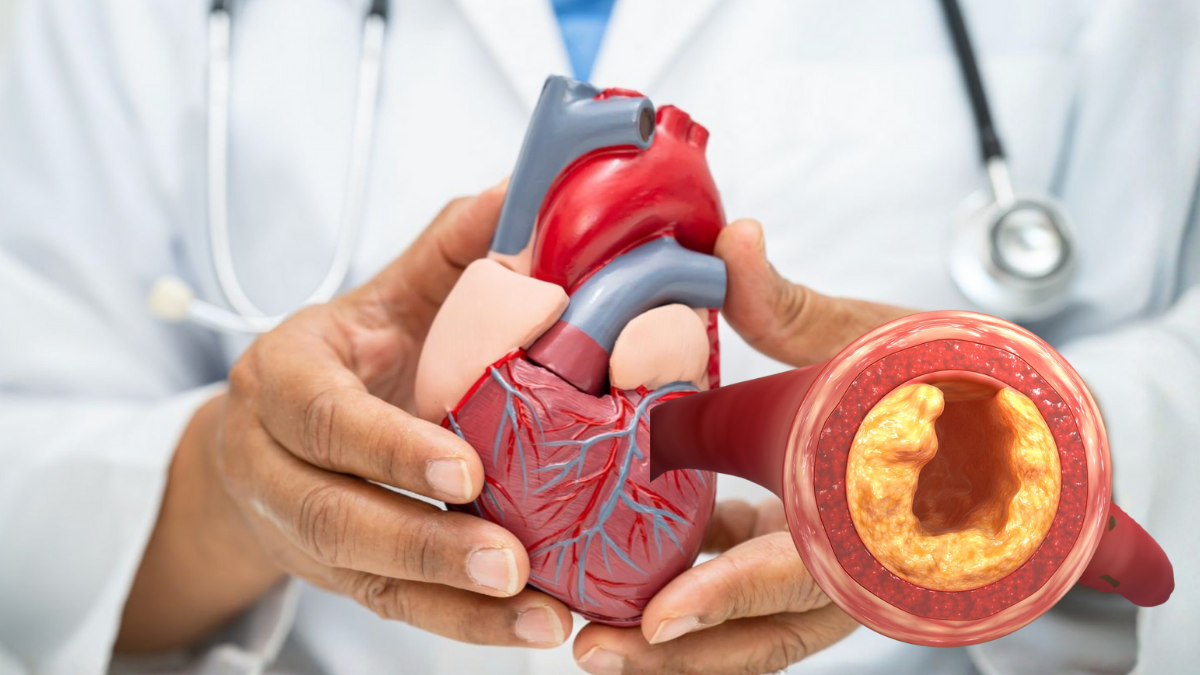
For decades we have heard and read that heart attacks are caused by narrowing of arteries by fat, cholesterol and calcium deposits. The buildup known medically as atherosclerosis — was seen as a one-way process leading to stiffer, narrower arteries and an increased risk of heart attack or stroke. Once the arteries are clogged they need to be medically cleansed like angioplasty, stents, or bypass surgery — all designed to restore blood flow, not undo the damage.
But what if that long-held belief isn’t entirely true? What if we can actually cleanse the arteries without medical intervention?
Dr. Vassily Eliopoulos, M.D., a board-certified emergency medicine physician from New York — who many know online as Dr. Vass — says the narrative is changing. In his view, the body has more healing potential than we’ve given it credit for. With the right testing, nutrition, and lifestyle strategies, he believes arterial plaque can be reduced, and in some cases, partially reversed.
Rethinking What Causes Heart Attacks
Most people picture heart attacks as the result of arteries so clogged with calcium and fat that blood simply can’t get through. While that does happen, Dr. Vass says that’s not the whole story.
“Most heart attacks aren’t from arteries fully blocked by hardened calcium,” he explains. “They happen when soft plaque ruptures — that unstable, fatty layer breaks open, triggering a clot that blocks blood flow.”
In other words, you can have “normal” cholesterol levels and even pass a stress test but still carry a dangerous amount of unstable plaque. That’s why Dr. Vass focuses less on traditional cholesterol numbers and more on the root causes — inflammation, oxidative stress, and endothelial injury — that make arteries vulnerable in the first place.
“Stents and surgery are life-saving when needed,” he says. “But they don’t fix the underlying disease process. If you want to truly change your cardiovascular health, you have to work from the inside out.”
The Step-by-Step Plan to Address Plaque Buildup
Dr. Vass’s approach revolves around understanding what’s happening in your arteries, correcting the underlying causes, and giving your body what it needs to repair itself. Below is the structured, science-backed process he uses to help patients reduce their cardiovascular risk and improve arterial health.
Step 1: Get Advanced Cardiovascular Testing
Traditional cholesterol tests — total cholesterol, LDL, and HDL — offer a limited view of cardiovascular risk. “They’re like looking at a shadow of the problem, not the actual object,” Dr. Vass says.
He recommends a set of advanced diagnostic tools that reveal more about what’s really going on inside the arteries:
- ApoB – Measures the actual number of atherogenic (plaque-forming) particles in the blood. Elevated ApoB means more particles can penetrate artery walls and cause buildup.
- High-sensitivity CRP (hs-CRP) – Detects systemic inflammation, a key driver of plaque instability and rupture.
- Lp-PLA2 – Identifies vascular inflammation specifically within artery walls.
- Coronary CT Angiogram (CCTA) – Provides a detailed 3D image of the coronary arteries, showing where plaque is forming and distinguishing between “soft” and “calcified” plaque.
“These tests change everything,” says Dr. Vass. “They allow us to stop guessing and start targeting the exact mechanisms behind the disease.”
Step 2: Transform Your Nutrition
Once the underlying data is clear, the next step is to optimize what goes into the body every day. According to Dr. Vass, nutrition is the single most powerful lever for reversing cardiovascular damage.
He advocates for a Mediterranean-style diet, which research has repeatedly linked to lower heart disease risk. The focus is on whole, anti-inflammatory foods:
- Colorful vegetables and fruits for antioxidants and polyphenols.
- Fatty fish like salmon or sardines for omega-3 fatty acids.
- Olive oil, nuts, and seeds for healthy fats that improve lipid profiles.
- Whole grains and legumes for fiber and blood sugar control.
Equally important is what to avoid:
- Added sugars and refined carbohydrates, which spike insulin and damage blood vessels.
- Ultra-processed foods, which trigger inflammation and oxidative stress.
- Excess omega-6 oils (such as soybean, corn, and sunflower oils) that disrupt healthy fat balance.
“Every bite you take either feeds inflammation or fights it,” says Dr. Vass. “The Mediterranean diet is one of the few that consistently does the latter.”
Step 3: Move Every Day — Even in Small Bursts
Exercise improves circulation, reduces inflammation, and boosts nitric oxide production — all crucial for healthy arteries. But Dr. Vass notes that you don’t have to be a marathon runner to make an impact.
He recommends a realistic, sustainable movement routine:
- Walk for 5–10 minutes after each meal to regulate blood sugar and improve vascular tone.
- Cardio exercise three times per week, such as brisk walking, cycling, or swimming.
- Strength training twice weekly to build muscle and enhance insulin sensitivity.
“Consistency is the secret,” he says. “You’re not exercising to burn calories — you’re exercising to send the right signals to your arteries.”
Step 4: Prioritize Sleep and Stress Reduction
Many people underestimate how much chronic stress and poor sleep affect heart health. Elevated cortisol levels and ongoing sleep deprivation can fuel inflammation, raise blood pressure, and impair the body’s repair mechanisms.
Dr. Vass advises his patients to:
- Aim for at least 7.5 hours of sleep per night. Deep sleep is when the body restores vascular health.
- Establish a bedtime routine — limit screens, lower lights, and go to bed at the same time each night.
- Incorporate relaxation practices such as mindfulness, meditation, or yoga to calm the nervous system.
“Heart disease isn’t just physical,” he adds. “It’s deeply tied to the way we live, think, and rest.”
Step 5: Use Targeted Therapeutic Support
Lifestyle is the foundation, but in some cases, supplemental therapies can enhance recovery and optimize results. Dr. Vass often integrates specific nutrients, peptides, and IV support under medical supervision:
- Niacin and Berberine – Help reduce ApoB and Lp(a), improving lipid particle balance.
- Peptides such as BPC-157 and Mod-C – May lower vascular inflammation and improve mitochondrial energy function.
- IV nutrients like Glutathione and Arginine – Support nitric oxide production and vascular flexibility.
“These therapies don’t replace healthy habits,” Dr. Vass emphasizes, “but they can amplify the results, especially when inflammation is stubborn or advanced.”
Step 6: Track, Adjust, and Be Patient
Healing arteries takes time — often six to twelve months before measurable changes appear on scans or lab tests. “This isn’t a quick fix,” Dr. Vass says. “But if you stay consistent, the results can be profound.”
Patients often notice improvements in energy, endurance, and even cognitive clarity as circulation improves. Regular retesting helps fine-tune the plan and ensure that progress continues in the right direction.
The Bigger Picture: Hope for Heart Health
For years, the medical community viewed atherosclerosis as a one-way process. But as research on inflammation, lipid metabolism, and vascular repair advances, the picture is shifting. The arteries, much like the rest of the body, have a remarkable capacity for healing when given the right conditions.
Dr. Vass’s root-cause approach combines traditional medical insight with modern longevity science. By focusing on inflammation, nutrient balance, and cellular repair, he offers a model that empowers patients — not just to survive, but to thrive.
“It’s not about treating heart disease,” he says. “It’s about restoring the body’s ability to protect and repair itself.”
The Takeaway
While no single approach can guarantee plaque reversal for everyone, the evidence increasingly supports the idea that lifestyle and targeted interventions can halt or even partially reverse atherosclerosis progression.
The steps are simple but powerful:
- Get advanced testing to identify your true risk.
- Eat to heal, not to inflame.
- Move daily to improve blood flow.
- Sleep deeply and manage stress.
- Support the process with guided therapies if needed.
- Be patient — healing takes time, but it’s possible.
Heart disease remains the world’s number one killer, but as Dr. Vass reminds us, the heart is also one of the body’s most resilient organs. With science, discipline, and hope, even hardened arteries may have a second chance.
Disclaimer: This article is intended for informational purposes only and should not replace medical advice. Always consult a qualified healthcare professional before starting or changing any treatment, supplement, or lifestyle plan.